Motorhome, Campervan or Caravan: Which One Should You Choose? (Full Comparison)
Motorhome vs campervan vs caravan compared: new and used prices, driving, licence, fuel use, comfort, tolls and resale value, so you can choose the right one.

Editorial transparency:At RutaFugaz we only share recommendations and gear that we have tested or researched in depth ourselves. Some links in this article may be affiliate links (Amazon, Decathlon or booking platforms). If you buy through them, we receive a small commission that helps keep this blog independent at no extra cost to you.
It is the question you ask us most: motorhome, campervan or caravan? The honest answer is that there is no perfect vehicle, only the perfect vehicle for the way you travel.
A couple escaping to the mountains every weekend does not need the same thing as a family with three kids spending a month on the coast, or a digital nomad working from the road ten months a year.
In this comparison we look at the main types with approximate figures for price, driving, fuel use, comfort and resale value, so you can make the decision with your head (and not just with Instagram).
1. The Vehicle Types, Explained
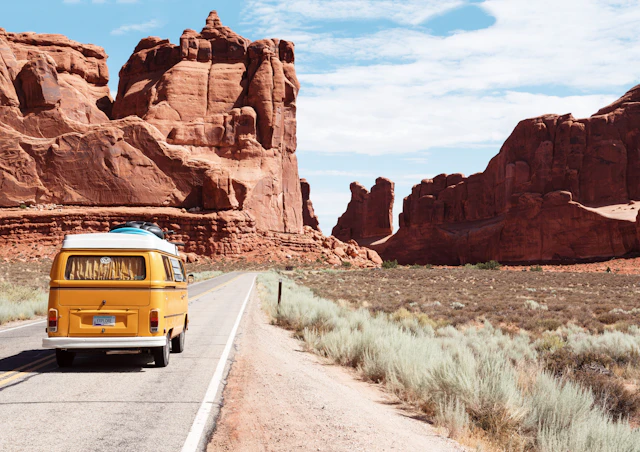
Campervan
A van converted into living space. It can be compact (like the VW California or Ford Transit Custom Nugget) or a large panel van (built on bases such as the Fiat Ducato, Citroën Jumper or Peugeot Boxer, from 5.4 to 6.4 metres long). It keeps the van’s original bodywork.
Motorhome
A living area built onto a cab-chassis. There are three formats:
- Low-profile (semi-integrated): The habitation unit joins the cab with an aerodynamic profile. It is the best-selling format: a good balance between space and manoeuvrability.
- Overcab (alcove): It has a bed above the cab (the “Luton” or alcove). It is the family favourite thanks to its number of sleeping berths.
- A-class (integrated): The original cab disappears and the living area is a single piece. Maximum comfort, a large panoramic windscreen and the highest price.
Caravan
A habitable trailer you tow with your car. When you reach your destination you unhitch it and still have the car free to get around.
2. The Big Comparison Table
| Criterion | Campervan | Low-profile / overcab motorhome | A-class motorhome | Caravan |
|---|---|---|---|---|
| New price (approx.) | €45,000 – 80,000 | €60,000 – 95,000 | €90,000 – 150,000+ | €15,000 – 45,000 (+ car) |
| Used price (approx.) | €20,000 – 60,000 | €25,000 – 70,000 | €40,000 – 110,000 | €5,000 – 30,000 |
| Typical length | 5 – 6.4 m | 6.5 – 7.5 m | 7 – 8.5 m | 5 – 8 m (without car) |
| Licence | B | B (most) | B or C1 depending on MAM | B, B96 or BE depending on weights |
| Fuel use (approx.) | 8 – 11 l/100 km | 10 – 13 l/100 km | 11 – 14 l/100 km | Car + 30-50 % |
| City parking | Easy | Difficult | Very difficult | Car free at destination |
| Sleeping berths | 2 – 4 | 4 – 6 | 2 – 5 | 2 – 6 |
| Comfort / bathroom | Basic – medium | High | Very high | High |
| Storage | Limited | Good (rear garage) | Very good | Good |
| Free overnight stays | Very discreet | Possible | Possible | Very limited |
| Resale | Excellent | Good | Average | Average |
Approximate, indicative prices and fuel figures; they vary with brand, equipment, year and condition.
3. Driving, Parking and Licence
The campervan wins hands down for everyday use. A 5.4 m campervan fits in a slightly larger parking space, gets into many open-air car parks and drives almost like a delivery van. A 6.4 m one already requires more planning.
Motorhomes of 7 metres or more are comfortable on the road, but historic centres, villages with narrow streets and car parks with height barriers become a problem.
About the licence (rules common to the whole EU):
- B licence: Vehicles up to 3,500 kg MAM. It covers almost all campervans and most low-profile and overcab motorhomes.
- C1 licence: For vehicles from 3,500 to 7,500 kg. Some large A-class motorhomes require it.
- Caravan: With a B licence you can tow a trailer of up to 750 kg, or a heavier one if the combined MAM of car and caravan does not exceed 3,500 kg. Above that you need B96 (combination up to 4,250 kg, with a specific training course) or BE (trailer up to 3,500 kg).
4. Tolls, Ferries and Hidden Costs
Tolls
In Spain, a two-axle campervan or motorhome without twin rear wheels usually pays as a light vehicle, although it depends on each toll operator and its criteria (height, axles, wheels). A car with a caravan usually pays a higher rate because of the trailer. In France, vehicle height is decisive and many motorhomes pay a more expensive category than a car. Always check each motorway’s rates.
Ferries
Ferry companies charge by length and height. An 11-12 metre car + caravan combination can cost considerably more than a 6-metre campervan. If you dream of the Balearics, the Canaries or Morocco, this matters.
Other costs
- Insurance: Campervans and motorhomes need their own policy; caravans need their specific one too.
- Roadworthiness test (ITV in Spain): All of them undergo periodic inspections, with frequency depending on age and vehicle type.
- Storage: If you have no space at home, storing a motorhome or caravan can be a significant monthly cost. A compact campervan sometimes fits in a normal garage.
- Maintenance: Motorhomes and caravans have more potential water-ingress points in the habitation unit; it is worth checking for damp regularly.
5. Comfort and Space: Where Life Is Better
If you are going to spend weeks inside, comfort rules:
- Bathroom: In large panel-van campervans it is usually compact or non-existent; in motorhomes and caravans it is a room of its own, with a separate shower in many models.
- Interior height: A high-roof campervan or a motorhome lets you stand up comfortably.
- Fixed beds: Motorhomes and caravans offer fixed beds you do not need to make up every night. In a compact campervan, the sofa usually turns into the bed.
- Rear garage: Low-profile and overcab models usually have a garage for bikes, chairs and table. In a campervan, storage is the big sacrifice.
6. Who Is Each One For?
Couples
Large panel-van campervan or small low-profile motorhome. Agile enough to go anywhere, with enough space for two.
Families with children
Overcab or low-profile with bunk beds. More seats homologated for travelling and sleeping without making up beds. If you are heading to a single destination, a caravan is a cheaper alternative.
Digital nomads
Large panel-van campervan or low-profile, with a good electrical setup, a work table and connectivity. If you work on a laptop, electrical autonomy is key; we explain it in our portable power stations comparison.
Weekend getaways
Compact campervan. You can use it daily as a car, park it at home and leave on Friday afternoon without any preparation. On a tight budget, even a small van converted for under €500 can be the first step.
Long trips and retirees
A-class or large low-profile. The comfort of a home on wheels for stays lasting months.
7. Quick Decision Guide
Answer these questions:
- How many people will sleep inside? More than 4 → overcab or caravan.
- Will you move every day? Yes → campervan or motorhome. No (single destination) → caravan.
- Do you need it as an everyday vehicle? Yes → compact campervan.
- Do you have somewhere to keep it? No → a campervan that fits in a garage or on the street.
- How much do you want to spend? Tight → used caravan or used campervan. Comfortable → low-profile or A-class.
- Are a full shower and bathroom essential? Yes → motorhome or caravan.
Our golden advice: before you buy, rent. One weekend in a campervan and another in a motorhome will teach you more than a hundred videos. You will find everything you need in our guide to renting a motorhome for the first time.
8. Frequently Asked Questions
Which holds its value best? Campervans hold their value very well thanks to high demand. Motorhomes do too, although with more variation by brand and condition.
Can I sleep in a caravan on the street? Free overnight stays are intended for self-propelled vehicles such as campervans and motorhomes; caravans are geared towards campsites. Check the local rules of each municipality.
Does a campervan use less fuel than a motorhome? Generally yes, thanks to its lower weight and better aerodynamics, although it depends on the engine and how you drive.
Our Verdict
- Choose a campervan if you prioritise freedom, easy driving, discretion and good resale value.
- Choose a motorhome if there are more than two of you or you want the comfort of a home with a full bathroom.
- Choose a caravan if you usually travel to one destination, already have a suitable car and want to spend less.
There is no universal answer, but there is a right one for you. Try, compare and choose calmly: the best vehicle is the one that gets you out more often.
Marcos & Elena | Outdoor Specialists
Editorial TeamIndependent travellers with more than 8 years converting vehicles and exploring the Iberian Peninsula. All routes, parking spots and wiring diagrams shared on this blog have been checked on the ground and against official traffic and environmental regulations.
Keep reading

Campervan Travel with a Dog: The Complete Guide to Safe and Happy Trips (2026)
Campervan travel with a dog: safe transport, paperwork, the danger of heat, a packing checklist, dog-friendly campsites and what to do in an emergency.
Renting a Motorhome for the First Time: Complete Guide (Licence, Prices and Checklist)
Renting a motorhome or campervan in Spain for the first time: driving licence, approximate prices, insurance, deposit and a checklist for pickup day.

How to Convert a Small Van into a Camper for Under €500 (Berlingo, Rifter, Caddy)
Step-by-step guide to turning a compact van into a functional, comfortable mini camper without re-registering the vehicle or breaking the bank.
Secret Map of Legal Overnight Spots in Spain (150+ Places)
Join our community for crowd-free micro-routes and get instant access to the interactive Google Maps map with drinking water fountains, quiet car parks and hidden coves.
Instant access. No waiting.